

Learning that Perfection is Overrated...

A little over two years ago, I posed a question in one of the UK Facebook photography groups, seeking advice on whether or not my fellow photographers thought it worth embarking on an MA (Photography) degree as someone who intended to teach and run workshops. The response was mostly along the lines of recommendations that the time would be better invested in honing my photographic skills than spending it in a university classroom. I ignored that advice and enrolled in an online degree with the AUB. Two years later I have just submitted my final assignments and am currently waiting to hear the results.

So, what would my advice have been to past-self? Absolutely. Go for it. You've got nothing to lose and will discover a great deal about what makes you tick as a photographer, encourage you to lean into your strenths, give you confidence and a much better grounding in the philosophy and history of photography.

Although I had zero formal training in the arts, my science PhD combined with a portfolio of current photographic projects and an explanation of my intent for the course were sufficient to persuade the powers that be that I was a serious enough candidate to start the course.

The programme I ended up doing was broken down into eight six-week long units and a final thesis. The units had incredibly ambiguous titles, such as "Future/Interdisciplinary Practice" and "Looking Out". The unit descriptions offered very little help to my scientifically educated mind, using expressions such as "challenge existing orthodoxies enabling students to explore the broader possibilities of what their photographic practice might involve" and complicated explanations such as "A range of delivery methods are used, based around a repeating cycle of acquisition, discussion, practice, production, and enquiry. Both synchronous and asynchronous delivery are co-ordinated" (still not sure about that one).

What this actually meant in the day to day was many evenings spent at the computer or reading in my armchair together with a weekly hour-long live interactive seminar accompanied by photographic experimentation. Even after two years, I still struggle with some of the accademic language used in the arts. Although every discipline has its jargon, a necessary shorthand to describe incredibly complex concepts, I do confess that I find the language of arts academia to be unnecessarily gatekeep-y and ivory-tower-ish. I ended up kicking against the goads here and deliberately wrote my final essay in a prose that (hopefully) everyone can understand.

Part of the genius of the course was that it enabled us all to engage with the units regardless of our photographic background. As well as myself - a self-confessed landscape and nature photographer, we had street photographers, portrait, documentalists as well as more more than a few who hadn't really discovered their niche as yet.

Alongside the theory side of photography, there were units which were very clearly directed to more practical aspects, including one very valuable one on gallery design and another on the business side of photography. Most of them were springboards that Each unit stretched me to think about different aspects of the discipline. Sometimes it was frustrating, especially when struggling to understand the basic concepts as they were phrased, more often it was interesting and thought-provoking. The discipline of keeping a photography journal documenting my reflections on the course subject and other source materials as well as my photographic response to them was a very useful habit to have developed and many of the units involved submitting extracts from this journal as part of the assignment.

The continuous-assessment marking meant that by the time I embarked on the final project in early 2026 I not only had a much better understanding of photography and my place in it, I also had over 70% of the final grade in my pocket. Because I don't intend to go further with this and am only really interested in the title, this gave me the freedom to fail - or at least just get a pass - with the final project and so gave me a little more space to pursue something that I was genuinely interested in rather than trying to min/max the grades.
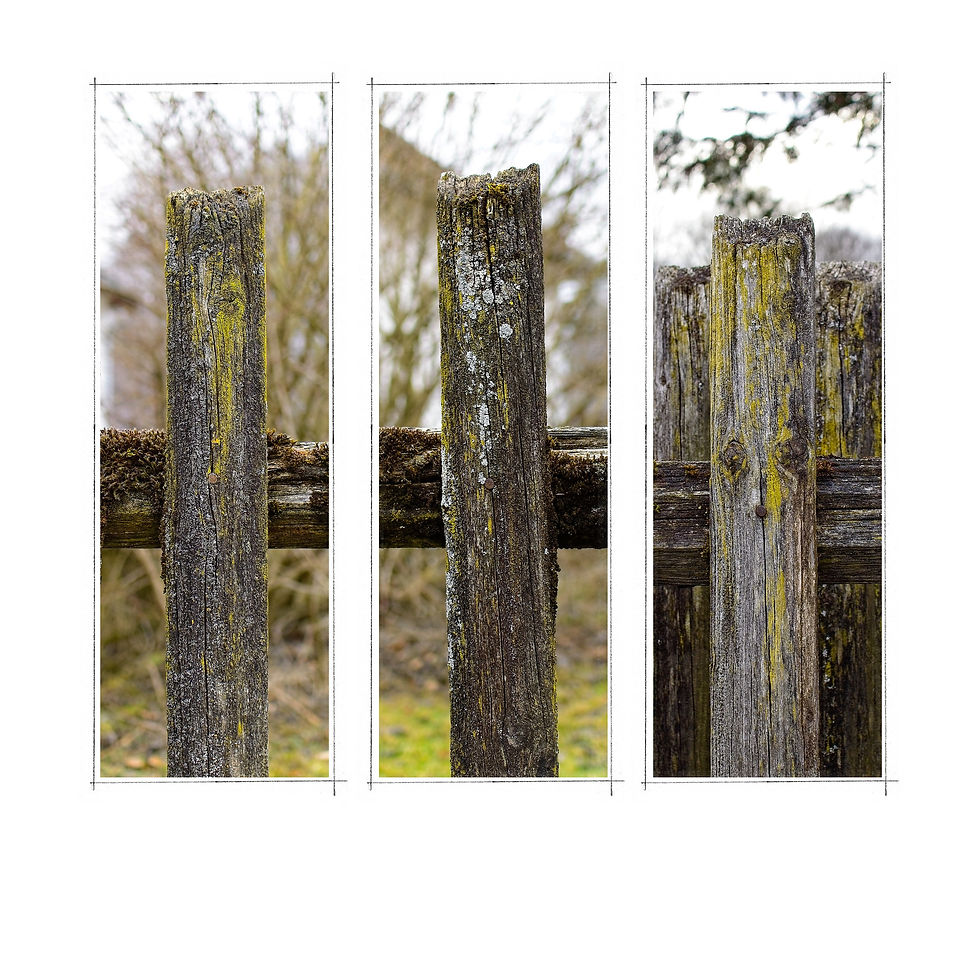
The final project ended up being a fine-art photographic study on imperfection and beauty in nature, leaning into the Japanese wabi sabi aesthetic and exploring what this can tell us about ourselves: "Is Perfection Overrated?" Landscape and nature photographers are generally locked into finding perfection in nature. This was an exploration of the imperfect. I'm generally my own worst critic as a person, and it was liberating to examine how nature is generally flawed and philosophise on whether this can be a window into how we see ourselves and help us to generally be kinder to ourselves.

In order to help the viewer to understand the context of the images (or at least the thought behind them) without spoon-feeding them what they should think or feel, the final project (a 68-page picture book) contains the following introduction:

Now it's a matter of waiting for the 12th October to find out whether I can add MA to the BSc. and PhD already behind my name🤪. I'll update as and when.


Comments